Newsletter Subscribe
Enter your email address below and subscribe to our newsletter

 ByJohn A
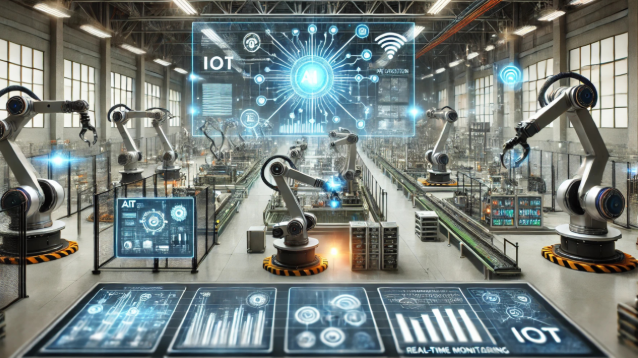
AI-driven monitoring in factories integrates sensor data, PLCs, MES, and ERP to enable real-time insights and proactive maintenance. The approach emphasizes low latency, data provenance, and robust access controls within a modular architecture. It shifts from mere detection to intervention, guided by governance and continuous evaluation. Stakeholders must align people, processes, and technology to sustain efficiency and trust, leaving a question about how to balance autonomy with oversight as conditions evolve.
AI-driven monitoring transforms factory operations by continuously collecting and analyzing data from sensors, machines, and processes to detect anomalies, predict failures, and optimize performance. It enables proactive maintenance, adaptive control, and resource efficiency while preserving worker autonomy.
Data ethics guides governance of sensitive information, and data labeling ensures reliable model training, validation, and transparent decision-making within constrained operational boundaries.
See also: What Is Crypto Lending and How Does It Work?
Real-time plant insights rely on a robust data architecture that integrates multi-source streams from sensors, PLCs, MES, and ERP systems into a unified, low-latency pipeline. The architecture emphasizes edge latency optimization and disciplined data governance, ensuring consistent schemas, provenance, and access controls. A modular, scalable design supports real-time processing, fault tolerance, and clear accountability without sacrificing operational freedom.
Industrial monitoring shifts from mere anomaly detection to structured, predictive intervention. Proactive maintenance leverages continuous model evaluation, tying fault forecasts to actionable schedules and resource planning. Threshold drift is monitored to recalibrate thresholds, preserving alert relevance. Model governance safeguards provenance, versioning, and accountability, ensuring reproducible decisions. The approach balances autonomy with oversight, enabling resilient operations while reducing unplanned downtime and maintenance costs.
A practical AI monitoring strategy integrates people, processes, and technology to ensure reliable insight and timely action. It emphasizes automation governance, aligning policies, data stewardship, and model lifecycle management with operational goals. By clarifying roles, enabling workforce empowerment, and standardizing interfaces, teams achieve rapid decision cycles. Governance, cross-disciplinary collaboration, and measurable metrics drive resilient, scalable monitoring while preserving freedom to innovate.
Unbiased auditing and shift fairness are maintained by continuous model evaluation, cross-shift datasets, and transparent performance metrics. The system enforces counterfactual testing, drift detection, and regular audits to prevent degradation and ensure equitable outcomes across shifts.
AI deployment costs at scale include hardware, software licenses, data governance, and personnel. A transparent cost breakdown highlights integration, monitoring, and maintenance. Scaling considerations require standardized data, governance controls, and continuous evaluation to balance freedom with oversight.
ROI measurement methods quantify alerts’ impact via downtime reduction, yield gain, and maintenance cost changes; alert translation converts detections into actionable events. From a detached standpoint, the analysis compares baseline versus post-deployment performance, emphasizing freedom and measurable value.
Essential sensors include vibration, temperature, pressure, and flow, optimized via sensor fusion to reduce ambiguity; remote calibration maintains accuracy across environments, enabling robust monitoring and rapid anomaly detection while preserving operator autonomy and system transparency.
Employee training supports AI adoption integration by aligning operators with model bias across shifts and AI monitoring costs at scale; ROI from AI driven alerts depends on essential sensors for monitoring and disciplined change management, ensuring freedom in decisions.
This synthesis shows AI-driven monitoring aligning sensors, PLCs, MES, and ERP into a cohesive, real-time intelligence layer. The coincidence of continuous sensing, governance, and proactive intervention underpins resilient operations, where anomalies and faults reveal themselves not as isolated events but as predictable patterns. With transparent labeling and provenance, decisions emerge from data—not guesswork—empowering workers and reducing risk. Ultimately, the convergent architecture enables adaptive control, efficiency, and sustained plant performance.